
 2026 Winner in the Finance CategoryClimate Curve Prize: Methane
Igniting the implementation phase on Methane
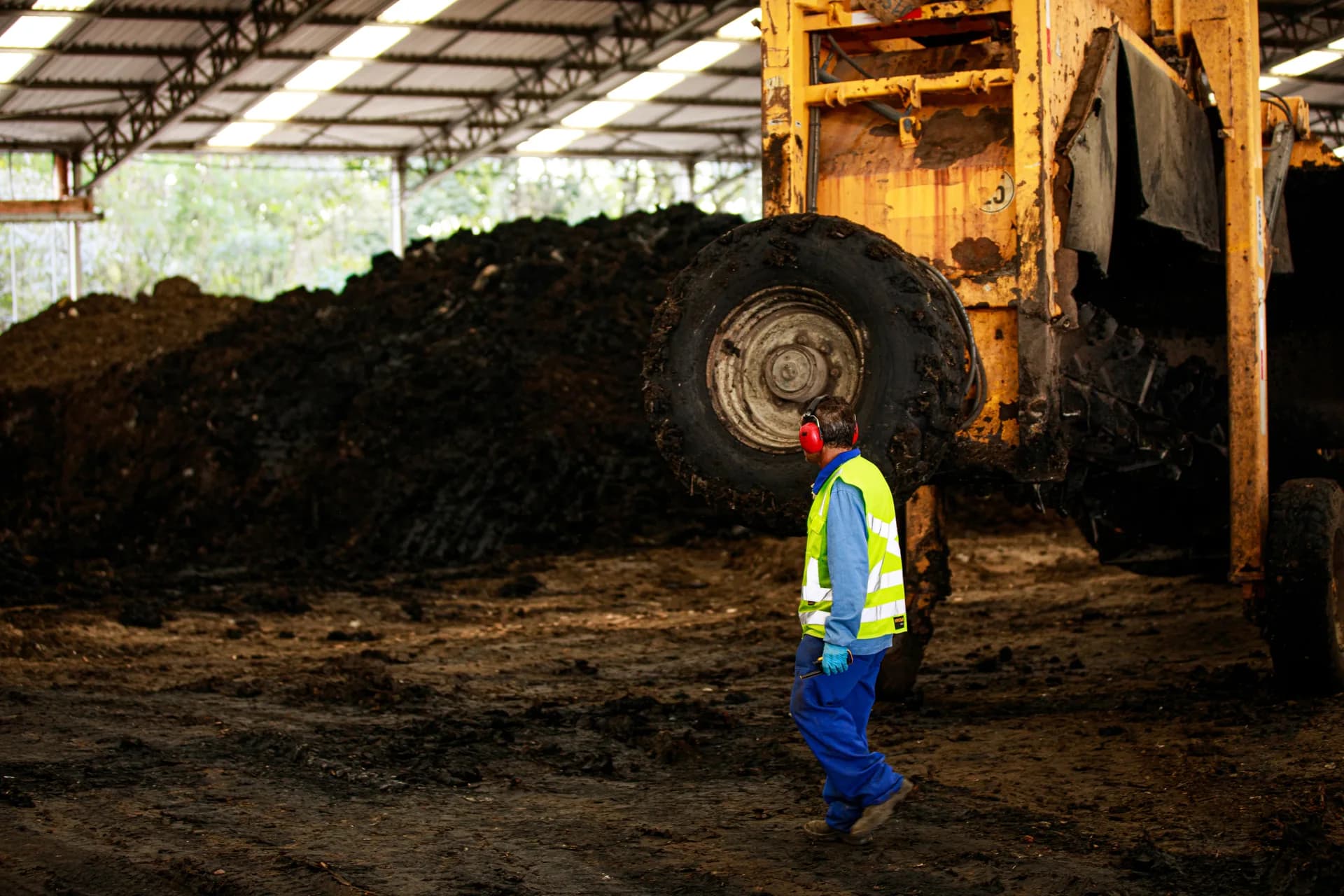
Reduce landfill methane and produce nutrient-rich compost.
Your participation showcases a scalable financing mechanism for circularity, evidence that backs the Biowaste Financing and Policy Roadmap.
From waste to opportunity.
Less than 1% of municipal biowaste is biologically treated in Latin America. It is an incredible opportunity to reduce methane release.


CCAC · BANGKOK, THAILAND
A movement grounded in the Biowaste Financing and Policy Roadmap
Bangkok · CCAC 2026
One Action. Your Expression.
Choose the card that accompanies your action for reducing methane.
Once registered, your purchase will be available in Carrot’s public records.

“Real, measurable, conservatively estimated, additional, permanent, independently auditable, and transparent results.”
Learn more
Implementing financing at scale requires building trust. After making a purchase, we invite you to dive deeper to understand how each credit is traced, verified and measured. Also, see how your payment is distributed among contributors and the rewards distribution policy that governs it.
Our intention
This credit purchasing experience is designed to showcase to corporate, policy and financing leaders the capabilities of Carrot’s digital MRV platform in scaling financing to methane reduction projects at a portfolio level. The full journey of each carbon credit from source to verification and issuance is digitally tracked, as well as the distribution of the proceeds from each sale to the corresponding ecosystem participants, enabling trust to be established between participants on the ground as well as with the buyers of outcomes-based climate assets. If your goal is to accelerate implementation of durable climate cooling solutions then we invite you to get in touch with your Carrot contact or at: contact@carrot.eco.
Does this make me carbon neutral?
Not on its own. Your purchase retires verified carbon credits to your account: organic waste kept out of landfill, methane reduced, one tonne of CO₂e per credit. That offsets the amount you bought, not your footprint as a whole. "Carbon neutral" is a claim about everything you do, not about one purchase: what it means differs by country, and making it responsibly requires a complete analysis of your activities. We advise against using the term.
What makes up the price?
The biowaste credit stack includes a Carbon Credit (from reduced landfill methane) and a Recycling Credit (from composted organic waste) traceable to a single unit of waste (MassID), recorded and publicly accessible on the Carrot ledger. The proceeds of each purchase are distributed among the participants in the project and the developers of its integrity infrastructure, and the distribution is shown once the purchase is complete. Methane reduction is worth 3–4× the value of carbon on near-term climate cooling (IGSD, Carbon Containment Lab and others). We suggest US$30/tCO₂e for biological treatment, a premium over landfill gas capture and utilization for the fugitive emissions it prevents and the system change it funds. At 4×, that yields US$120/tCO₂e, lower than the average price of biochar at US$136/tCO₂ (CDR.fyi) for carbon removal through biomass pyrolysis. The recycling credits add US$33.53 per tonne of CO₂e, priced as the co-benefits produced through a separate methodology and verification model. Our own modelled analysis values those co-benefits in Brazil at about US$100 per tonne of organic waste (reduced public waste-handling and health costs, and recyclables recovered), and assigns no value to green jobs, soil carbon or chemical fertilizer substitution. The recycling credits are therefore priced at a discount of about 66%. Together, the two credits come to US$153.53 per tonne of CO₂e, and the number of recycling credits that come with each tonne depends on the amount and type of waste behind the specific methane reduction (GasID), and is set once the order is fulfilled. The stack creates a premium category for waste methane credits called Circularity, launched with AlliedOffsets in October 2025 to differentiate it from landfill gas destruction and utilization, and presented at NY Climate Week 2026. The biowaste credit stack enables not only methane reduction and the build-out of critical infrastructure, but also pulls recycling policy forward and funds system change toward circularity. It is catalytic carbon finance, where the cost of carbon ultimately goes to zero as other policy frameworks take hold: first producer responsibility for food (Food EPR), then waste charges based on what each generator throws away. The cost will decrease progressively with economies of scale, delivering on the promise of achieving net-cost savings at a system level in the waste sector methane category (UNEP Global Methane Status Report 2025). This is the circular transition.
What about additionality, permanence and leakage?
Additionality. In Latin America and the Caribbean, less than 1% of municipal waste is composted or anaerobically digested. In Brazil, it is about 0.4%. Diverting organic waste from landfills and recycling it is more expensive than landfilling. Credit revenue is needed to close that gap. Permanence. Methane that never forms due to composting, cannot leak, escape or be re-released. Nothing is stored, so there is no reservoir to monitor and no reversal to insure against. Leakage. Every load of organic waste is digitally tracked from pick-up to the composting facility, inside a project boundary capped at 200 km. The methodology also applies conservative assumptions to how the finished compost is managed. Fugitive emissions. Food waste decays fast, and much of its methane forms before a landfill's gas collection is installed. The US EPA estimates that landfills with gas capture collect only about 50% of the methane from food waste over its lifetime, and that up to 61% is never captured where collection starts at the regulatory minimum. Gas capture manages the methane already in landfills. Keeping organic waste out stops uncontrolled methane production at the source and enables the broader circular economy to function, which further reduces emissions through resource-use efficiency. Bureau Veritas validated the methodology in February 2025 and concluded that it generates additional and permanent results.